Are perfumers born with a special gift? How do they ‘train’ their noses ?

Are perfumers born with an innate sense of smell, or is their skill honed through diligent training? While some perfumers may possess a natural sensitivity to scents, the art and science of perfumery often require extensive education and practice. We asked some of the world’s best noses for their top tips on training our own…


Traditionally, aspiring perfumers trained in esteemed institutions, particularly in France. However, the world of perfumery has expanded, welcoming self-taught individuals and those who pursue part-time courses online or in person, guided by experienced perfumers.



Mathieu Nardin, a native of Grasse and part of a new generation of perfumers, emphasises the importance of becoming more aware of the sense of smell. He advises focusing on the emotions and personal feelings evoked by scents to enhance olfactory memory. ‘The most important thing is that people become more aware of what a great sense smell actually is. Taste and sight always seem to come first and people aren’t so focused on their nose. What perfumers do is to close their eyes and focus on that one sense a lot – I mean all the time, not just at work. There are so many studies that say the nose is so closely linked to memories and images, it’s incredibly intense. But you have to explore it deeply.’

‘When you smell something – lavender, a particular perfume, a cooking ingredient – you have to forget what it literally is and instead link it to a personal feeling, whatever it makes you feel. The more you analyse those emotions and link that to personal feelings, the better you become at smelling more and memorising those smells. This is how we learn at perfumery school. It has to be personal, or it has no meaning…’



Esteemed perfumer Christine Nagel agrees, emphasising the importance of olfactory exploration every single day: ‘Be olfactively curious. Smell everything you can, everywhere, every day. Have your nose on high alert!’ And she should know. From the first time she met a ‘nose’, that’s what Christine Nagel knew she wanted to be. So she trained as a research chemist and market analyst, and in Paris, in 1997, was launched on a seriously distinguished career that’s included creations like the blockbuster Narciso Rodriguez for Her (with Francis Kurkdjian), Jimmy Choo Flash, and Guerlain’s Les Elixirs Charnels collection.


Alberto Morillas, who has created some of the world’s most iconic perfumes – Calvin Klein CK One, Kenzo Flower, Bvlgari Omnia, Cartier Panthere de Cartier, Giorgio Armani Aqua di Giò for women – suggests that anyone can improve their sense of smell. Born in Sevilla, Spain in 1950, Morillas describes himself as ‘mostly self-trained’ in perfumery, having begun his career at the School of Beaux Arts in Geneva before joining Firmenich in 1970. He advises, ‘If you train your nose, you’ll be able to make the difference between the main olfactive families. In fact, everyone has his own olfactive memory like a “library of scents”, made of smells you associate with people, places, travels, objects, food, moments of your life…’

‘You can enrich this library by smelling fragrances in store or trying them on skin to live with them,’ he coninues. ‘Some are fresher, some are more sensual, try to put words on what you smell to define the different sensations. Then repeat, repeat ceaselessly. Practice by smelling in blind. Be spontaneous, say everything, feel free to write everything which comes to mind. Time after time, you’ll have your own references and you’ll be able to classify fragrances by main themes, like woody, aromatic, citrus and ambrée. Memory. That’s the most important thing. You need to smell again and again and again the same thing and then mix it with other things and see how it changes. Like cooking – you need to taste all the time to improve your palette and it’s the same with smell.’


Sophie Labbé, a perfumer who spent her childhood between Paris and the Charente-Maritime area of France, encountering contrasting smells that proved particularly inspiring, also offers valuable advice. She studied at IPSICA, Paris’s perfumery school, and at the Givaudan Perfumery School in Geneva for six months. In 1992 she joined IFF as a junior perfumer, where Sophie has worked on fragrances including Bulgari Jasmin Noir and Mon Jasmin Noir, Calvin Klein Beauty, Estée Lauder Pure White Linen, and Salvatore Ferragamo Signorina and Signorina Eleganza.

Discussing how an ordinary person might think about smelling things the way a perfumer does, she said, ‘Open your nose – be aware of all the smells around us. Start with all the everyday smells that you take for granted and then move on to perfumes. You can train your nose. Smell as many perfumes as possible, starting with the classic milestone perfumes which every perfumer studies when they start their perfumery degree. Read as much as you can. There are so many books, and some excellent articles about perfumery.’

These insights from renowned perfumers, shared during interviews for our multi-award-winning magazine, The Scented Letter, where we regularly take a deep dive into how perfumers work through our popular Working Nose series, reveal that anyone can improve their relationship with fragrance. Even if you don’t aspire to become a perfumer, these tips can enrich your daily life.


Top Tips from Perfumers:

  • Be Olfactively Curious: Smell everything around you.

  • Focus on Emotions: Link scents to personal feelings and memories.

  • Build a Scent Library: Regularly smell fragrances and categorise them.

  • Start with Classics: Familiarise yourself with milestone perfumes.

  • Practice Blind Smelling: Test your ability to identify scents without visual cues.


So, as you can see, while some may have a natural inclination towards scent sensitivity, the journey to becoming a perfumer involves rigorous training and a deep connection to one’s olfactory experiences. Whether you’re an aspiring perfumer or simply wish to enhance your appreciation of fragrance, all these practices can totally transform your sensory world for the better. Now, how will you begin improving your own relationship to your sense of smell? We urge you to start today!
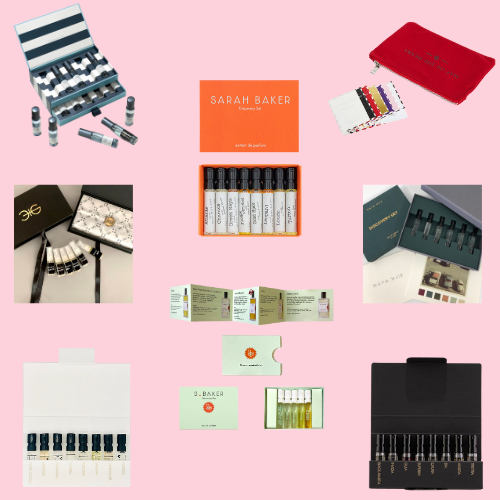


Why not begin your own ‘smell training’, as perfumers do, today? You can quickly and (much more) affordably build your own ‘scent library’ by collecting samples, as found in our curated Discovery Boxes – which include an array of scents from all manner of houses, niche, designer, independent, well known, or ultra new to the scent scene. Alternatively, there are a number of Brand Boxes you could begin with, featuring scents across the collections a house has to offer – perfect for comparing and contrasting the perfumers styles. However you choose to begin your nose training – start today, and get your sense of smell primed to enjoy your perfumes even more…

Written by Suzy Nightingale

Marty the Mighty Nose – smelly poems required!

Do you know a child aged 7-11 who loves writing and exploring their sense of smell? Get those nostrils in training, for The Fragrance Foundation‘s Marty the Mighty Nose Awards are once again open for smell-inspired poetic entries!

Kids tend to be far more naturally connected to their sense of smell than most adults, and the annual competition invites Key Stage Two pupils to explore this sense even more, by taking ‘…an aromatic approach to creative writing, as we invite them to write their own smell-inspired poems for the chance to win prizes for themselves and for their schools.’

The Fragrance Foundation say: ‘Whether it is inviting children to develop their use of simile and metaphor in English by writing smell-inspired poems or learning about history through the stinky aromas of the past (Ancient Egyptian Mummification anyone?), structured activities incorporating fragrance and smell can truly support and inspire pupils of all abilities.’

Marty the Mighty Nose entries can be made by schools, or by individual parents and guardians, and details of the competition and how to submit an entry are explained, below. Poems are judged and awarded prizes individually, but there’s also a Best Class prize to the highest overall scoring class, so the more who join in, the merrier Marty will be.

The Fragrance Foundation encourage pupils to write poems inspired by the sense of smell (the whiffy socks of an older brother has been a previous winner’s poetic theme!) and these are then read and chosen by a distinguished panel of judges each year, with this year’s Head Judge being Nicky Cox MBE, Editor of young person’s newspaper First News, who are this year supporting the awards.

Entering Marty The Mighty Nose Awards is easy – download the entry pack here. The deadline for submissions is the 14th December 2018, and entries can be sent online or through the post.

Here’s one of last year’s winning entries, to get you inspired…

Smelly Seasons
Suncream and salty air,
Summer smells are here,
Candyfloss and doughnuts,
Sweet smells at the pier.
Lavender and Wisteria,
Spring flowers in bloom,
Bluebell and lilac,
All smelling of sweet perfume.
Fireworks, pumpkin soup,
And smoky burning leaves,
Toasted sweet marshmallows,
Fill the autumn’s breeze.
Frost morning air,
Cloves, cinnamon and pine,
Pretty burning candles,
Christmas is my favourite time!

– Bella Barlow
Shiplake C.E Primary School

We always wonder if the talented children who enter the awards with their smell-inspired poems could well be the noses behind future fragrances – or the journalists writing about them –  either way, we can’t wait to read the results, so get those kids’ noses in training…

Written by Suzy Nightingale

Marty The Mighty Nose Awards – open for entries

Get those nostrils flapping in preparation, for The Fragrance Foundation‘s Marty the Mighty Nose Awards are once again open for smell-inspired poetic writing…
The annual competition invites Key Stage Two pupils (aged 7-11) to ‘take an aromatic approach to creative writing, as we invite them to write their own smell-inspired poems for the chance to win prizes for themselves and for their schools.’

The Fragrance Foundation say: ‘Whether it is inviting children to develop their use of simile and metaphor in English by writing smell-inspired poems or learning about history through the stinky aromas of the past (Ancient Egyptian Mummification anyone?), structured activities incorporating fragrance and smell can truly support and inspire pupils of all abilities.’
Entries can be made by schools, by individual parents and guardians, and details of the competition and how to submit an entry are explained, below…

The Fragrance Foundation encourage pupils to write poems inspired by the sense of smell (the whiffy socks of an older brother has been a previous winner’s poetic theme!) and these are then read and chosen by a distinguished panel of judges each year, with awards being presented to the children and schools during the prestigious Jasmine Awards ceremony, held at BAFTA.

Known as ‘The Oscars for fragrance journalism’, The Jasmine’s are highly sought after, celebrating innovative and creative fragrance writing from the top-selling glossy magazines, newspapers, independent blogs and beyond. And when The Mighty Nose Awards are read out during the ceremony, there’s always a ripple of absolute delight within the industry professionals present.
Teachers can view and download materials to aid the scent training, and request t-shirts and scratch-‘n-sniff stickers from the Marty the Mighty Nose website, but for now, why not sit back and relax while Richard E. Grant guides you through your very own workshop in the film, below?

Entering The Mighty Nose Awards is easy – download the entry pack here.
We’ve been highly honoured at The Perfume Society to be nominated for and win several Jasmine Awards, and always wonder if the talented children who enter the awards with their smell-inspired poems could well be the fragrance writers – and noses behind the fragrances of the future! So get those kids’ noses in training…
Written by Suzy Nightingale

How can you improve your sense of smell? Watch this cute cartoon and book our 'How To' workshop!

Are perfumers possessed of magical noses gifted to them at birth – with a heightened sense of smell beyond the reach of mere mortals…?
Well, there’s an argument to made that perhaps some of the ‘noses’ behind our favourite fragrances are somewhat naturally gifted, but my goodness they had to work to get where they are. Perhaps also some of them grew up in perfume-y places – like Grasse – where the culture, history and even the streets themselves are awash with scent. But the truth of the matter is, they had to start somewhere. And those of us lucky enough to have a working sense of smell can undoubtedly go about improving that sense – and thereby enhancing every aspect of our lives.
We couldn’t resist sharing the wonderfully incisive (and undeniably cute) cartoon, below, that does a great job of explaining how important our sense of smell is in everyday life, and the basics of how one might begin mastering the sense of smell.

Apart from simple practice, practice, practice – the most important aspect, we have gleaned by interviewing those famous perfumers over the years; is learning to “fix” a smell in your head by creatively describing it in terms that are absolutely and entirely personal to you. And how on earth do you go about doing that? By attending one of our regular How To Improve Your Sense of Smell Workshops…
These fun, informal (but totally informative) sessions are held in groups, some people liking to bring friends along others preferring to sniff solo, and during which you will be taught how to start building your very own volcabulary of scent – pinning those intensely personal memories and emotions that are automatically triggered the second you smell something (good or bad!) and using that to invesitage – and vastly improve – your sense of smell. We’re not pretending you’ll come out as a fully fledged perfumer – and neither is this the reason we set up the workshops. But we can gurantee you’ll not only experience your favourite fragrances in a whole new way – you will appreciate your nose like never before.

Resized
[Photos by Essence PR]
So, do you fancy a morning or afternoon of sharing fragrances, laughter and learning to improve your sense of smell – with a fragrant goody bag at the end of it and as many biscuits and tea (or coffee) you can drink in-between? Of course you do!
Come and join us for the next How To Improve Your Sense of Smell Workshop in London on Saturday 4th February. Not a Londoner? Look here to find (or request) your nearest workshop.
How do you join in the fragrance fun? It’s simple:
How To Improve Your Sense of Smell Workshops cost £10 for VIP Subscribers – which is 100% redeemable against any box purchase on the day of the workshop
Want to bring a guest? (it’s even more fun with a friend!) £20 for Guests of subscribers or non-VIP Subscribers
Maximise the opportunity by choosing to become a VIP with your booking for £35 to include a one-year VIP subscription to The Perfume Society, £10 of which is redeemable against box purchases on the day of the workshop.
Want to read a review from a happy attendee of a previous workshop? Cosmetic Candy blog waxes lyrical about attending one of our Manchester workshops, and Samantha Grocutt, MD of Essence PR describes her experience, here.
Workshops are generally hosted by Senior Writer of The Perfume Society, Suzy Nightingale within the London area, and co-founder Jo Fairley further afield.
Simply bring along a favourite fragrance – and your nose – and we so look forward to meeting you there.
Book your tickets here.
Written by Suzy Nightingale

The scent of success… Perfumer Karen Gilbert talks us through the fascinating world of 'functional fragrance'

When a perfumer creates the scent for a ‘functional fragrance’ – a product that millions of people around the world use daily in their homes or on themselves – they are composing the scent of a home, a loved one, the smell you associate with your own clean skin, perhaps. An incredibly technically challenging role, perfumers are plucked from the very same schools as those who create fine fragrances, indeed may often be the very same ‘nose’…
For a full exploration of this fascinatingly secretive cross-over between designer fashion fragrances and the scent of “clean washing”, see the hot-off-the-press Fashion & Fragrance edition of The Scented Letter magazine. But we wondered – is there room for a perfumer’s artistic expression, or does it necessarily take a differing form? We caught up with perfumer, expert consultant and teacher, Karen Gilbert, to talk about the challenges perfumers and evaluators face when evoking the scent of “clean washing”, and wondered how on earth she got into this fabric care – or “functional fragrance” – world.
products-300x294-1
‘I fell into it by complete accident,’ Karen reminices. ‘I originally went to The London College of Fashion to train as a make up artist after working the cosmetics industry for a few years. I decided to stay on and do a cosmetics science diploma and two-week work placement at IFF [International Flavors & Fragrance]. They asked me back for a six-month temp position that turned into five years working on UK own label products as an evaluator, and running the fragrance library for the London office.’
Having interviewed the perfumer’s at IFF’s Centre of Excellence for fabric care, we knew how talented they are. But although the world of fine fragrance and fabric care/fucntional fragrances are entwined, some raw ingredients simply don’t translate because of the high temperatures and processes they’re subjected to.
Explains Karen, ‘Creating fragrances for an alcoholic fine fragrance is the easiest thing as there are much fewer technical challenges. When you are creating for a laundry care product you not only have to work with a base that already may have an unpleasant odour but you need to make sure the fragrance doesn’t get washed away during the wash/rinse cycle. There’s also the budget to consider, as most people will only pay a certain amount for something like a fabric conditioner.’
img_9950_sml2
And exactly how closely do the fabric conditioners and fine fragrances rub against each other? ‘Oh goodness everything filters down eventually to functional products. It’s so weird when people ask me to smell a perfume as I really learned about fragrance whilst I was at IFF so most of my days were spent sniffing “types” rather than fine fragrance. So if I smell a particular men’s “Aquatic” fragrance now I always think of blue toilet cleaner, and to me Tresor translated down to peach fabric conditioner. Whenever I smell a new fragrance I still find myself thinking “oh that would be good for a roomspray”  or “this would work in a men’s shower gel”. I was never a “perfumista” so my view of fragrance is quite different to the average fragrance fan I think!’
Such is the demand for perfumers to create various scented products for fragrancing every aspect of our lives that, as part of her fragrance training offering, Karen now runs a specialised course for those wanting to learn more about this intriguing yet technically challenging world. She explains that ‘…it came out of years of students coming to my live classes where we make an alcohol based EDT, who really wanted to create for their own product line.’ And that although the techniques of making a fragrance are the same ‘…there are lots of other things you need to take into consideration when creating for other types of product base.’
Aimed at anyone who want to learn more about developing fragrances for face, body and bath products – including how to professionally evaluate the performance of your products – you can find out more about Karen’s course, here…
Written by Suzy Nightingale