Fragrances for Downton Abbey’s Final (?) Goodbye…

The lush curtains are about to fall for the last time at Downton Abbey, the cinematic Downton Abbey: The Grand Finale glimmering on U.K. screens from 12th September – so we’re scent-matching the glamorous scenes for you!

There’s scarcely a soul who hasn’t, at least once, longed to be swept up in the grand drama – to join Lady Mary on the marble staircase, to eavesdrop in the drawing room’s glowing hush, to slip unseen through the warren of bustling corridors below stairs. And so we decided to once again turn a cultural entertainment moment into an opportunity to olfactively infuse the experience – this time by revisiting some classic scents to set the scenes. [You can read MANY more of these fragrance matching blog features here, or by searching ‘scent matching‘, by the way]. But why this time are we turning our gaze to Downton?


Well, this final glimpse of the Crawleys’ turbulent, glamorous lives is suffused with the ache of farewell. But for those who wish (desperately!) to linger in the world of Downton – or to relive every gilded triumph and quiet heartbreak by rewatching from the first episode – vintage fragrances remain our most powerful time machine. Even just thinking of the fragrances while watching the trailer (above), you’ll find yourself transported more fully into the feeling of it all – and isn’t that one of the most magical abilities our sense of smell has?

So then, here are five glorious scents, redolent of the era, all mercifully still available to this day, to help you lose yourself in Downton’s embrace – and to imagine: who, or where, might you be within the Downton universe…


Guerlain Mitsouko Eau de Parfum carries the air of storm-soaked orchards clinging to late summer fruit, velvet shadows deepening in the evening. Wear Mitsouko for the scenes that demand a heart that dares – perhaps a clandestine rendezvous on a moonlit terrace, or as Lady Mary, porcelain composure veiling inner turmoil, glides through a grand ballroom. Its mossy, peach-laced chypre is a story in itself, sophisticated and a touch mysterious, a whiff of secrets best kept.

£130 for 75ml eau de parfum guerlain.com
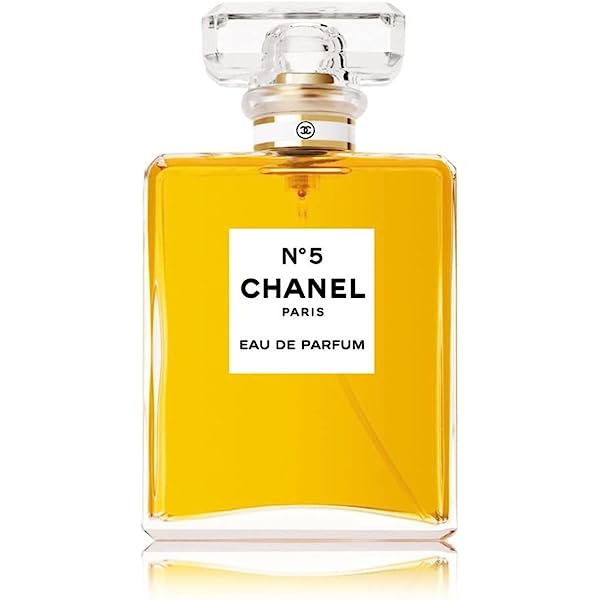


Chanel No5 is an all-time icon swathed in powder, aldehydes, and the ghostly petals of May rose. It is the scent of crisp, elegant linen and polished marble beneath sparkling glass, the drawing room shimmering with sunlight and unresolved drama. Slip into No5 for moments of morning tea, for the clink of porcelain and the unfurling of letters – or as Lady Edith pens her future by window light. This floral classic is a Downton daydream, bottled.

£78 for 35ml eau de parfum johnlewis.com
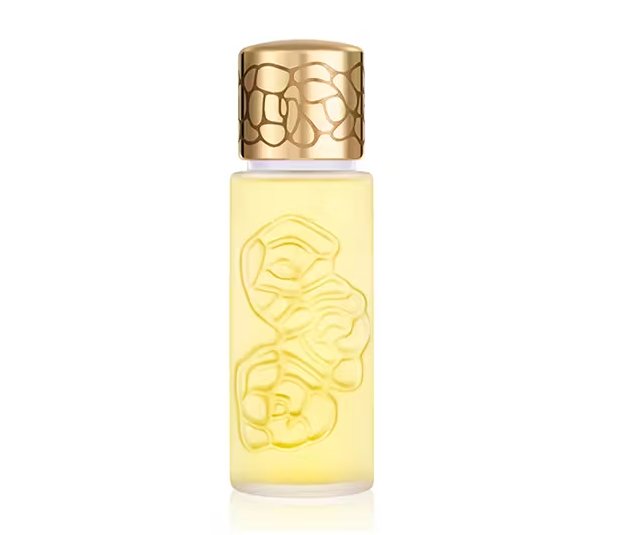


Houbigant Quelques Fleurs L’Original is a breathless swirl of cut blooms gathered into the arms after a moonlit supper, opulent yet never brash. Imagine the fragrance trailing behind as one twirls across the marbled floor or as the camera finds the afterglow of a flirtatious conversation on a garden bench. This multi-floral bouquet, first created in 1912, still conjures the grand occasion.

£140 for 100ml eau de parfum lookfantastic.com


Floris No. 89‘s a true British classic from a house founded in 1730, evokes leather-bound ledgers in a noble’s study, crisp citrus zest bracing the old wood panelling as plans are laid and fortunes made (or lost!). This is for Lord Grantham, for the men of Downton, and for anyone dreaming of a vintage car ride down the winding drive, the world rolling quietly by.

£110 for 100ml eau de toilette selfridges.com


Penhaligon’s Bluebell beckons a dewy stroll through ancient woodlands just as bluebells tremble beneath the morning mist, a whispered memory of the Abbey’s sprawling gardens before the day’s dramas unfurl. It’s green, gently floral and utterly English, calling to mind soft footsteps over mossy earth or a secret tryst hidden by spring leaves – as if you’ve slipped away from a party down a wildflower path for a secret tryst.

£140 for 100ml eau de toilette sephora.co.uk

As the final credits roll, the echoes of these beloved characters will glide on – and perhaps, somewhere in the wings, lies the promise of more stories yet to be told (we hear rumours of a possible prequel. But with these fragrant timeless treasures, the perfume of Downton lingers a little longer, weaving us into its magnificent tapestry each time we indulge in a spritz and slip, ever so gladly, back into that Downton world…


Written by Suzy Nightingale

Green Scents of the 70s – a bridge between seasons

Green fragrances are often thought of as spring-like, but these olfactory marvels are far more complex than mere harbingers of vernal renewal – and they’re PERFECT for ‘not quite autumn’…

Beneath their fresh, leafy exteriors lies a world of depth and sophistication, where earthy musks and woody notes create a captivating juxtaposition of light and shadow. And because they classically lean toward the Chypre fragrance family – full of mossy, musky delights as they warm – green can be the perfect perfumed bridge for the autumnal seasonal shift.

In recent years, we’ve witnessed a resurgence of fragrances that harken back to the golden age of green scents, but while later features will show some modern scented examples of the trend, first we wanted to go retro, and see from whence this scented trend originally sprang. The 1970s first saw an explosion of these verdant creations, beloved by both men and women for their bold, nature-inspired profiles. So, exactly WHY were they so popular then (and what’s made them stand the test of time, to be relevant again…?)


Green Connection to Nature and Counterculture

The green fragrance trend aligned with the growing environmental movement and counterculture of the 1970s. These scents evoked a sense of naturalness and connection to the earth, appealing to those embracing a more eco-conscious lifestyle. The use of patchouli, with its deep, earthy aroma, became particularly popular among hippies and free spirits of the time.

Gender Fluidity in Fragrance

Green fragrances often blurred traditional gender lines, reflecting the era’s evolving attitudes towards gender roles. Many green scents were considered unisex or were popular among both men and women, challenging conventional fragrance marketing.

Fashion and Lifestyle Integration

The popularity of green fragrances coincided with broader fashion trends of the 1970s, including the rise of casual wear and natural fabrics. These scents complemented the era’s style, which often emphasised a more relaxed ‘Hey man, let’s just go with the flow’ vibe and the overall nature-inspired aesthetic.


Green fragrances of the 1970s

Classic Green

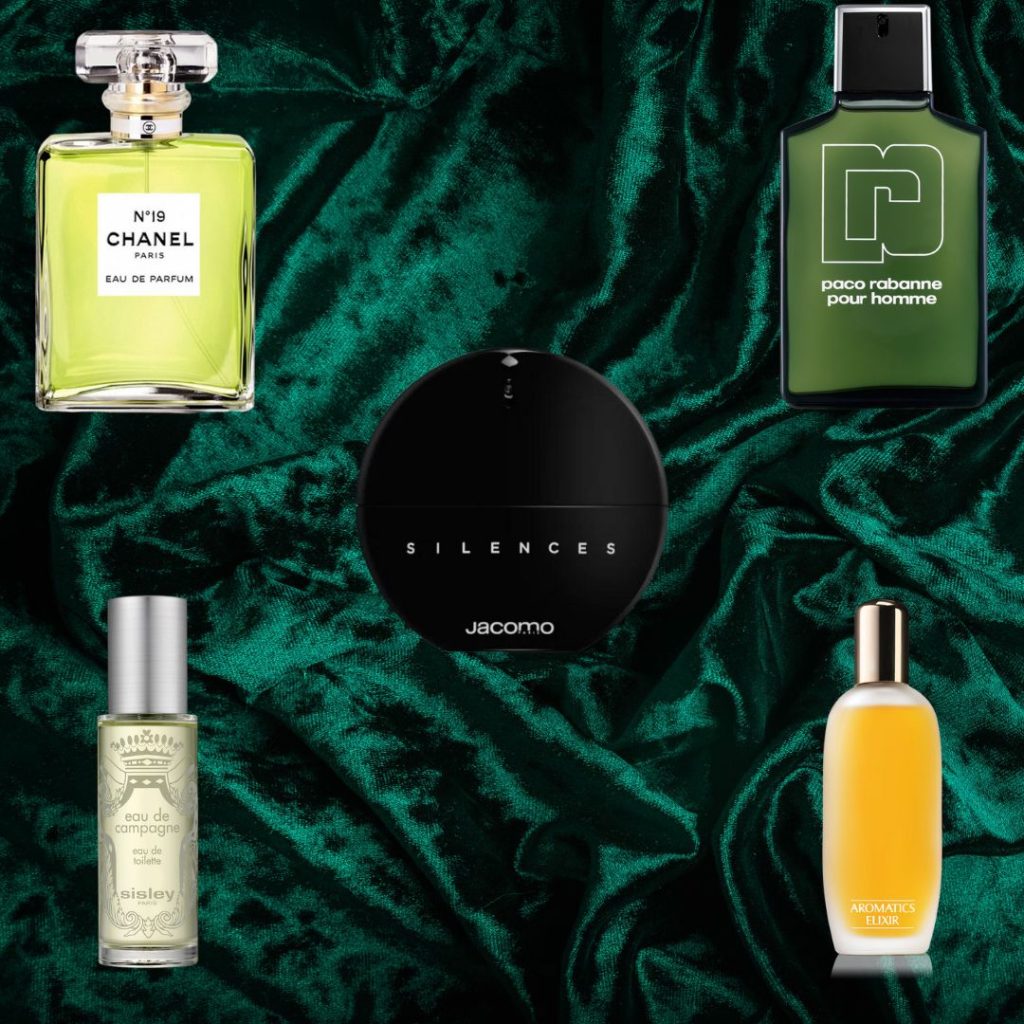
The annals of perfumery are rich with legendary green fragrances that have stood the test of time: Paco Rabanne Pour Homme (1973): A masterful blend of lavender, oakmoss, and honey, this scent epitomizes masculine freshness with a warm, sensual base; Chanel No.19 (1971): Named for Coco Chanel’s birthday, this fragrance marries galbanum’s sharp greenness with the powdery elegance of iris. Sisley Eau de Campagne (1976): A tribute to the French countryside, it captures the essence of tomato leaves, herbs, and cut grass. Silences by Jacomo (1978): A study in contrasts, Silences juxtaposes bright galbanum with deep, mossy undertones. Clinique Aromatics Elixir (1971): A bold chypre that intertwines green notes with a rich, spicy heart and a warm, ambery base.

The Green Chypre Connection

Green fragrances often blur the lines with the chypre family, sharing a love for oakmoss, patchouli, and woody notes. This overlap creates scents that are at once fresh and grounded, making them ideal for transitional seasons.

Bridging the Seasons

As summer’s warmth begins to wane, green fragrances with their aromatic, woody, and musky facets offer the perfect olfactory bridge to autumn. These scents echo the changing landscape, where lush foliage gives way to earthy forest floors and sun-warmed bark.In essence, green fragrances are a testament to nature’s complexity, beckoning an undercurrent of depth and mystery, just waiting to be discovered…


Written by Suzy Nightingale

Fall in Love with Penhaligon’s Potions & Remedies Fragrances…

Penhaligon’s have entranced us with their Potions & Remedies perfumes, and they must have known that something was in the air… Have you noticed that feel-good fragrances are proving quite the hit the world of perfumery lately? It seems as though we are all wanting MUCH more out of our scent choices in recent years, with many of us now choosing fragrances based on our mood, and our emotional requirements, alongside wanting to smell amazing of course.

It’s in this spirit of sensorial ‘rescue remedies’ that Penhaligon’s created their Potions collection, and they have been rapturously received by perfumistas the world over for their utterly intriguing inspirations and, indeed, their stunning design. Penhaligon’s were among the esteemed winners of this year’s coveted Fragrance Foundation Awards for their brilliantly apothecary-esque aesthetic.


“For every ill there is a cure. For every woe there is a way. Penhaligon’s Potions & Remedies collection is distilled with potent powers to cure – or procure – altered states. Fancy a formula? Each fragrance harnesses the perfumed power or nature to instill some health, strength, and vitality into one’s life.”


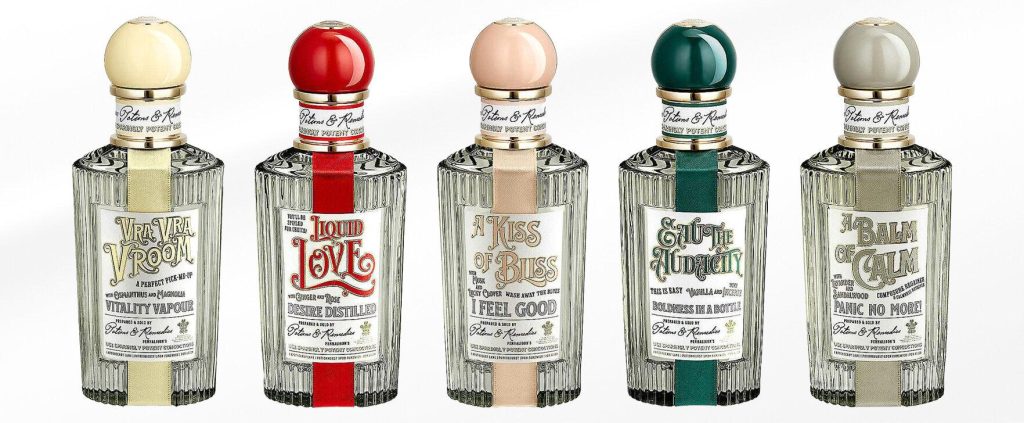
Penhaligon’s recently-launched Potions collection offers fragrant remedies for modern living that evoke William Penhaligon’s experiments with aromatic concoctions. Beckon courage with Eau the Audacity, energise with Va Va Vroom, ignite desire with Liquid Love, banish worries with A Balm of Calm, or feel euphoric after a spritz of A Kiss of Bliss. Visit the website to explore them – it’s a truly joyous experience!

Eau the Audacity – ‘A bottle of boldness to cast off the shackles of shyness. Audacious orange blossom surprises vanilla and incense; how fancy! Spritz sparingly (or not – we dare you).’

Liquid Love – ‘A passionate eau de parfum to set hearts a-flutter. Spicy rushes of pink pepper, ginger and turmeric lock in fiery embrace with chilli and musk. Be warned: one spritz too many may cause swooning.’

Vra Vra Vroom – ‘Dash it all and make haste! An energetic blast of mandarin and magnolia, enthusiastic spoonfuls of osmanthus absolute. Spritz your way to success. Nothing shall stop one now.’

A Balm of Calm – ‘A lullaby of lavender, a cloud of geranium. Iris and sandalwood for a dose of composure; an instant serenity remedy. Rum and soft woods round off Penhaligon’s tranquillity blend. Heaven.’

A Kiss of Bliss – ‘Spritz those blues away with bergamot and green clover. Musk and rose sing from the hilltops: would one like to join? An eau de parfum borne from sunny days to have you dancing all night long.’


Penhaligon’s says: ‘William Penhaligon laboured for his legacy to be delightful. One to cure all ills, one that he and future generations would be rightly proud! You are about to discover the result of his travails… Discover five new fragrances filled to the brim with miraculous ingredients to boost your mood.’ All Penhaligon’s Potions £195 for 100ml eau de parfum penhaligons.com


A Penhaligon’s Potions & Remedies Discovery Set is also available: £30 for 5 x 2ml eau de parfum

Keen to learn more about Penhaligon’s fascinating history and the heritage of their perfumery house? Read all about how Penhaligon’s began, and how hey transformed, in our page dedicated to them…


Written by Suzy Nightingale

Guerlain’s honeyed history… and the origin of that iconic ‘Bee Bottle’

Honey (and bees) are at the heart of the house of Guerlain, and have been since its founding. With much of their skincare imbued with the healing properties of honey, their iconic ‘Bee Bottle’ inspired by beehives, and now, one of their best-selling fragrances, Tobacco Honey, infused with the scent; Guerlain’s history is abuzz with the scent of honey…


Guerlain’s Bee-autiful History:

‘The founder of the House, Pierre-François-Pascal Guerlain, dedicated a citrus Eau de Cologne to Empress Eugénie to celebrate her marriage to Napoleon III. Naturally, he named it “Eau de Cologne Impériale”. He then entrusted glassmakers Pochet du Courval to create a bottle adorned with his majesty’s coat of arms, the bees, and a festoon pattern, inspired by the Place Vendôme column. The Bee Bottle was born. It would become an icon.


The Empress was so impressed with this gift, that she named Pierre-François-Pascal Guerlain “Supplier to the Empress” (“Fournisseur de l’Impératrice”), which helped to rapidly spread Guerlain’s renown throughout Europe’s great royal courts. A legend was born. Today, the emblematic Bee Bottle is still made in the Pochet du Courval ateliers and now lends itself to colour and personalisation. The perfume bottles can be refilled time and time again in a celebration of how luxury can meet sustainable development as guided by Bees. The “Dames de table” continue to seal and hand decorate this historic bottle, creating some exceptional versions that perpetuate tra-ditional craftsmanship, art and artisanship.’


With bees so central to their heritage, it was only natural for Guerlain to create a buzz for the conservation of bees, because… ‘If bees were no longer to exist,’ Guerlain explain, ‘most fruits, flowers and seeds would disappear forever, taking with them an infinite number of irreplaceable colours, flavours and smells. Across the world, intensive farming, vanishing habitats, climate change and so forth are drastically impacting the health of bees, both wild and domestic.’ Hence why they set up the Guerlain For Bees Conservation Programme.

In order to preserve a future for bees – and for fragrance – Guerlain remind us that ‘It is crucial for us to protect them, but this alone is not enough. We must also raise awareness around the importance of bee conservation for the world of today and tomorrow. This is why Guerlain is committed to teaching children about the cause of bees, thanks to its Bee School. Its programme Women for Bees, in partnership with UNESCO, also aims to train new women beekeepers at UNESCO’s biosphere reserves.’

‘Since 2021, Guerlain has made a symbol of this day initiated by the UN. Each year, the House raises no less than one million euros to donate and accelerate the actions of its “Guerlain for Bees Conservation Programme”. A very special day in which one of the House’s friends, Angelina Jolie, has participated since the beginning.’


Needing more of Guerlain’s honey-infused heritage? You can read all about the gloriously honey-rich Guerlain Honey Tobacco in our previous exploration of honey fragrances, and the differing ways honey is used to coax particular characters from other perfumery notes. There’s a whole hive of Guerlain’s history to explore in our page dedicated to the founding and development of the house, and did you know there’s even a comic book dedicated to Guerlain’s heritage?


Choose your own Guerlain Bee Bottle, which you my have personalised for a special occasion, or for a gift, in-store or online. You can select any fragrance, then decide on the size and style of bottle, and even choose the cord and seal for the scent – what a way to memorialise a wedding or anniversary – or simply savour your all-time favourite fragrance. And given the current buzz around that Honey Tobacco, we reckon many a bee bottle will be housing that scent for years to come…


Written by Suzy Nightingale
 

The Grand Tradition of Granado Pharmácias

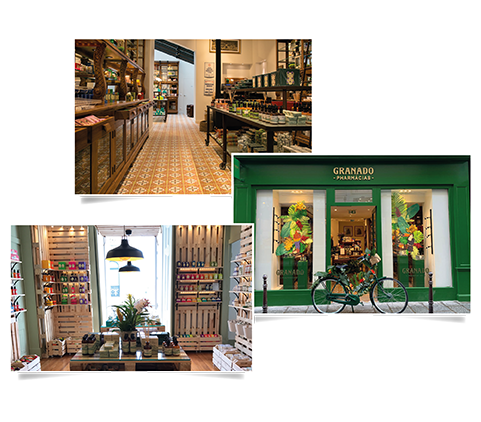
Though rightly famed in Brazil, it’s only recently we’ve been able to get our hands on the Granado Pharmácias fabulous collection of scented products here in the U.K. And we’re rejoicing that this heritage-rich house can now become beloved by British perfumistas, too…


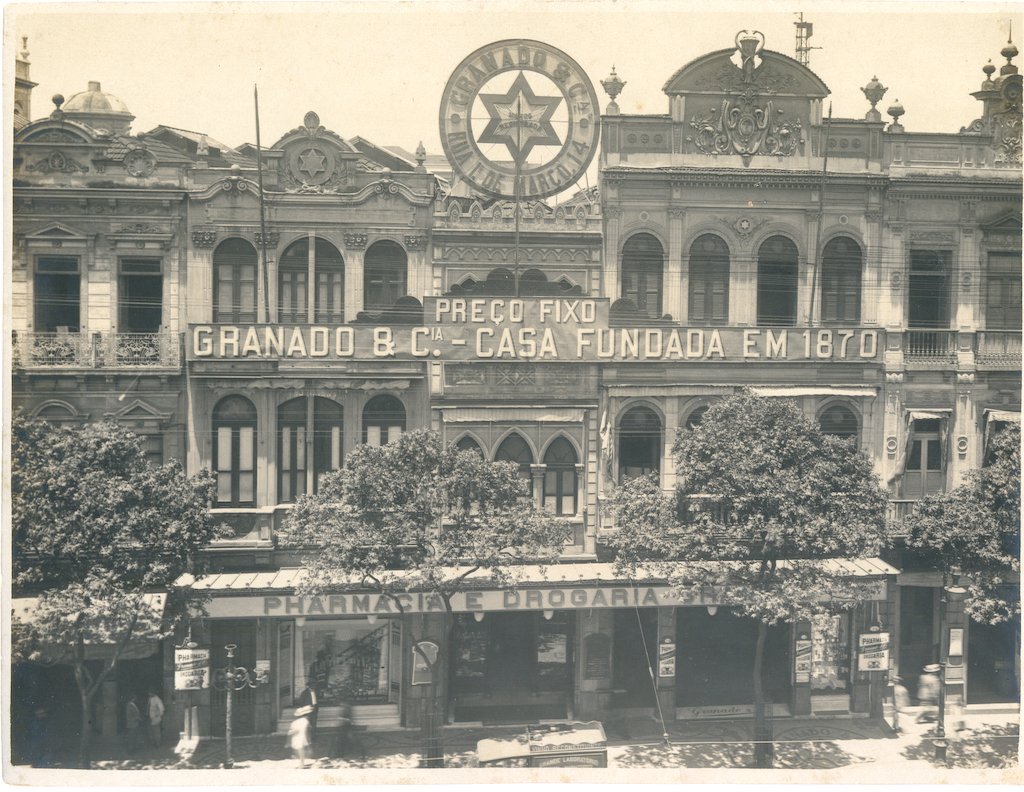
The Granado Pharmácias story begins in the 1800s with the enterprising José Antonio Coxito Granado started selling his own natural remedies – which were all created from the plants, herbs and flowers José found growing in his home of Teresópolis, a stunning, mountainous region of Rio. From these humble beginnings, a whole business flourished, and it wasn’t long before the very first Granado retail establishment was secured in 1870.


Set amidst one of the most bustling, successful streets in Rio de Janeiro, it wonderfully remains their flagship store to this day (we love that connection to living history – so many similar buildings have been lost to be developed into flats, or simply knocked down). In addition to the medicinal remedies they’d begun supplying, the now blooming Granado Pharmácias started importing other products from Europe, ‘adapting their formulas to the standards and needs of Brazilians.


The quality and effectiveness of their offering soon made Granado one of the official pharmaceutical suppliers to the Royal Court. Through this connection, in 1880, Dom Pedro Il granted it the title of Official Pharmacy of the Brazilian Royal Family.’ With a royal seal of approval, the Pharmácias flourished even further – expanding their range while remaining true to their heritage – doubtless helped along by the fact this treasured house remained within the original family for three generations of their growth.


From selling natural remedies in the 1800s to a whole collection of fabulous fragrances and home scents, this proudly Portuguese house, so long adored in Brazil. Now, we’re thrilled their fragrant wares are available in the U.K. too…Sissi Freeman, Marketing Director of Granado, echoed our excitement, commenting:


‘After years of success in Paris, we are excited with the opportunity to launch in the UK market. Granado is a very traditional brand founded in Rio de Janeiro in 1870. Partnering with an iconic store such as Liberty for this next step in our international expansion,  is a dream come true!  After a period of lockdowns, we are thrilled to offer British consumers with our fresh take on fragrance and colorful creations, inspired by our heritage, Brazilian culture and ingredients.’


You can read more about the history of Grandao Pharmácias on our page dedicated to them, where you can also click on individual fragrances and learn about their ingredients, and the mood they were created to evoke. Your only problem then, of course, is to decide which one to try first…


Written by Suzy Nightingale
Floris – Royalty, Churchill & Marilyn Monroe loved them: here’s why YOU should, too…

Floris have scented everyone from royalty, Florence Nightingale, prime ministers and even Marilyn Monroe, but now you can dip into their incredible history (and try some their more contemporary fragrances) in their beautifully curated Floris Discovery Collections…


The long-distinguished history of Floris first began in the dreams of one Juan Famenias Floris, who in 1730 sailed from his native Minorca to set up in London. Marrying an English girl, he settled in business as a barber on Jermyn Street within the fashionable St. James’s area, first making hair combs and then assuaging his homesickness by blending fragrant oils he’d transported from Europe. Customers soon took to ordering bespoke blends, all recorded in leather-bound ledgers, enabling Floris to re-create them should further supplies be required in the future – and thus a fragrant dynasty was born.


Many of those original ledgers, order forms and letters of thanks are still in existence, preserved by successive generations of the Floris family, and offering a uniquely fascinating glimpse of British fragrant taste through the ages. Their books boast orders from Admirals serving under Lord Nelson, Florence Nightingale, George IV, through to Winston Churchill. In 1820, Floris received the first of 16 Royal Warrants, the most recent being the title: Perfumers to HM The Queen Elizabeth II and Manufacturers of Toilet Preparations to HRH The Prince of Wales. (Now, of course, King Charles!)


And then there was Marilyn Monroe. The scent the world’s biggest sex-symbol always made sure to stock up on? In their extraordinary archive (some of which is on display in the rear of their Jermyn Street boutique), Floris happen to have an original form detailing Marilyn’s order for their surprisingly unisex and greenly fresh Rose Geranium. Indeed, she loved it so much she requested SIX bottles at a time be delivered to her in Beverley Hills! (NB: A far more contemporary rose is their fragrance A Rose For… in The Private Collection – an intriguingly smoky gossamer embrace).


The original Floris shop still stands on Jermyn Street. (A couple of generations ago, fragrances were actually manufactured two floors below street level, in a basement known as ‘the mine’.) Now beautifully refurbished, the boutique many other intriguing artefacts to discover on display, along with a wide wardrobe of perfumes to explore. Edward Bodenham – an ancestor of Juan Famenias Floris himself – is the current Perfumery Director at Floris, with fragrance clearly in his blood.

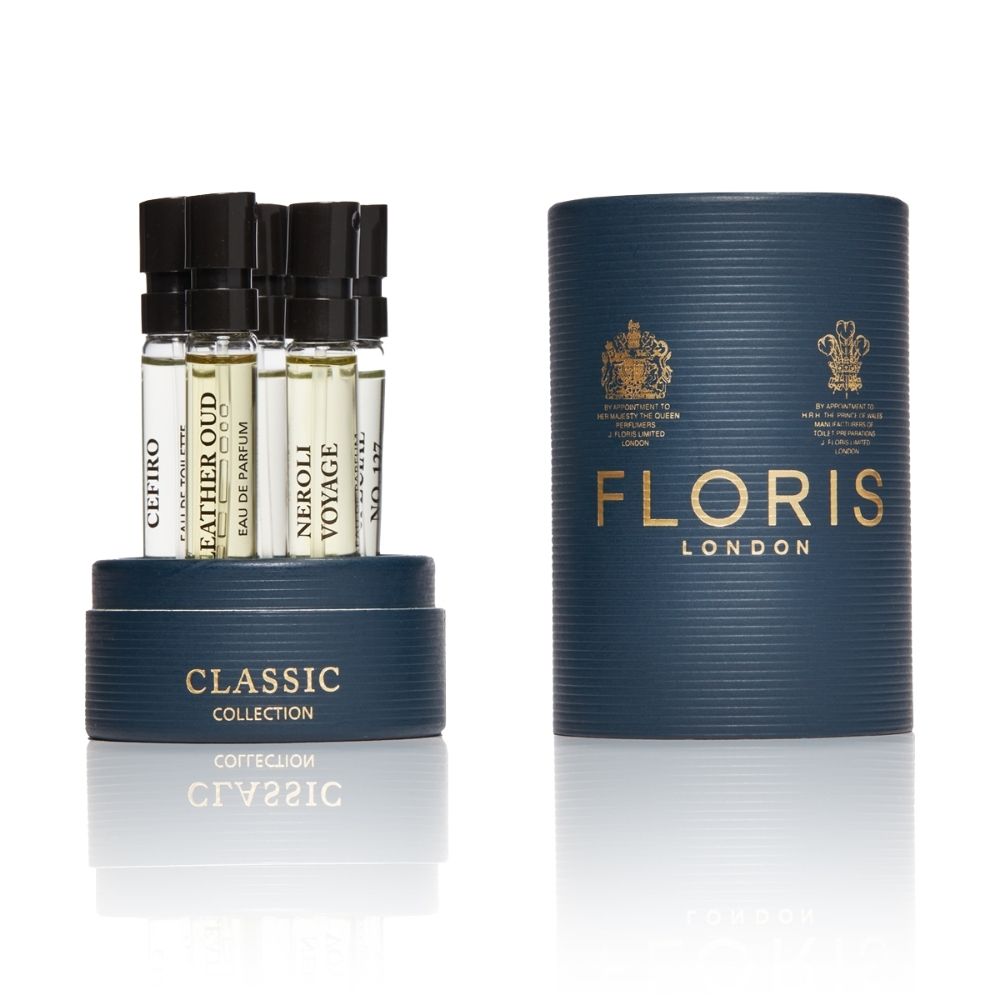
Floris Classic Collection Set £35

As he explains: ‘I feel immensely proud to be part of the family business and to have the opportunity to help introduce our perfume house to a new generation. I have such fond memories of visiting the shop from a young age, and it is very nostalgic for me to be around the fragrances that I have grown up with my whole life. They really are like old friends to me.’


No matter how fascinating or notable their past, however, no perfume house could merely trade off their history. So as Edward notes – and more recent creations like sun-drenched Neroli Voyage in the Classic Collection and utterly addictive Honey Oud in Private Collection, prove – Floris are ‘always evolving. We have to be experimental and explorative when working on new fragrances – in just the same way my forefathers were in their day.’ Adding: ‘I hope that they would be proud of our creations today.’

Floris Private Collection Set £35

No question about it, in our minds. And we say: here’s to the next 300 years or so, Floris!

Written by Suzy Nightingale

Clive Christian – the art of Matsukita – an interview with artist Yukako Sakakura

Taking inspiration from their unique heritage, Clive Christian recently celebrated their beautiful Matsukita fragrance in artful style at an exhibition in Mayfair’s Jovoy perfumery. We were honoured to catch up with the world-famous artist Yukako Sakakura and talk to her about creating the most stunning multi-layered painting directly inspired by smelling the scent…


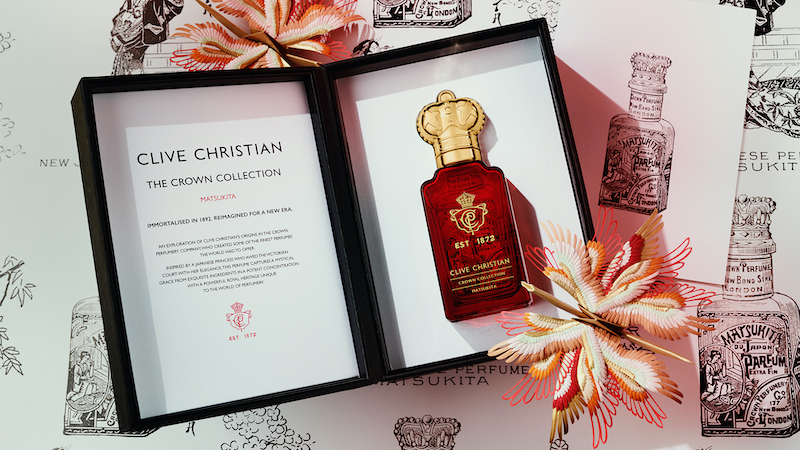
Matsukita was inspired ‘by a fabled Japanese princess who awed the Victorian royal court with her elegance and grace’ and first launched in 1892 by Crown Perfumery, advertised with lavish, hand painted illustrations. Clive Christian have dipped back into this intriguing heritage to recreate some iconic fragrances with a distinctly modern feel – the meeting place of historic references and scents that have a certain classic style, but are thoroughly contemporary in character when you wear them.

With this juxtaposition in mind, today Matsukita ‘has been reimagined to capture this illusive elegance.’ A deliciously woody chypre, there’s an invigorating freshness wafting around the top notes to keep this breezy and simply beautiful. Green bergamot, pink pepper and flecks of nutmeg swoop to the floral, woody heart of Chinese imperial jasmine infused with refined notes of black tea. The smoke dispersing to reveal an amber-rich base swathed in whisper-soft musk add further to the ‘sense of mystery and grace’ they hoped to capture of the original.


 Further expressing their heritage in modern ways, Clive Christian has long heralded contemporary artists, and they were delighted to partner with artist Yukako for a sensory collaboration around the scent of Matsukita, the experience of smelling which formed the inspiration for her extraordinary painting, ‘You Close Your Eyes to See Our Spring.’ Yukako explains: ‘I’ve always liked painting natural elements, because flowers link with emotions. In Japan we use these natural elements in art a lot, so it therefore feels quite natural for me to use these symbols to express feelings.’

‘I love to use layers within my work, so many I sometimes lose count! It’s usually 50 plus layers, anyway. I finish my flowers first and paint over the whole surface, then I change the shape of the flowers with further layers. If I didn’t have the layers, everything looks too flat to me, it’s not wavy enough! I want to make sure all the flowers are kind of singing the same song, it’s a way of breathing life into the landscape; so, I just paint over and over again until it feels like all the flowers are breathing with the same rhythm. To gauge when it’s finished, I must sit in front of the painting for ages, sometimes five hours (with a cup of coffee), looking closely and making sure everything is doing the right thing.’


‘I smelled the fragrance first, and then wore it as I painted, it helped feed my imagination and it’s as though I felt the energy of the scent go down my arm into the paintbrush. I know that might sound strange to some, but I started learning calligraphy at the age of three, and that’s all about imagination, getting to know what kind of brush marks you can make…’


‘In calligraphy, you learn that before you make a single mark on the page you have to spend time imagining it all in your head, and then you join those energies of thought and process. For my Matsukita painting, it was all about smelling the fragrance and connecting to the emotions it gave me, then translating these into images, and they flow from my brain to the brush. You know, I did all my studying about art in U.K. I’ve not done any art studies in Japan, and I find that when I’m in the mood for 100% concentration, I speak English, even in my head.’


‘I find I talk to colours [Yukako giggles] and I have changing relationships with them. For instance, I used to hate yellow years ago, and it would creep into my paintings sometimes and I’d get angry with it for spoiling them and tell it to go away, but now I absolutely love yellow! I knew I wanted yellow in this as soon as I smelled Matsukita. I must explain that I don’t talk to the colours out loud. It’s all in my head – it’s part of the way I communicate with the world and translate my feelings to the canvas. Again, while smelling the scent I knew the roses must dance first in the painting. I don’t let anyone in my studio when I’m painting because it’s disrupting to my conversation with the painting itself! My family all think I’m very weird, but it’s the way I work…’


What an incredible privilege it was to meet this visionary artist and see her work in the flesh – for seeing pictures of the paintings really cannot convey their extraordinary depth of feeling and movement. You really can sense the ‘sway’ and ‘dance’ of the flowers and petals in the breeze, standing in front of the picture itself. And isn’t that the way of fragrance itself, too? Talking about individual notes can only bring you so far – to really know a fragrance and feel its emotional connection, you must wear it on your skin. And we urge you try Matsukita this way, to truly feel the character of the scent yourself…

 Clive Christian Matsukita £350 for 50ml at Jovoy

 Written by Suzy Nightingale

Schwarzlose Berlin – the heritage fragrance house that survived war by being one step ahead…

From piano-maker to perfumer, the historic Schwarzlose Berlin have been selling scents since 1856, beloved by the royal courts of Europe and Chinese Emperors alike. This always-innovative perfumery has survived war, inflation and changing tastes by always being one step ahead, but their name still may not be known to many. Let’s put that right…

It all began when entrepreneurial piano-maker Johann Friedrich Schwarzlose decided to branch out and establish his own drug store at Markgrafenstrasse 29, beginning with production of perfumes.


Quickly establishing himself, his next venture to take over the distinguished fragrance manufacturer Treu & Nuglisch in 1858. The company had been purveyor to the Court, and now the aristocracy flocked to the new fragrance shop. By 1897, Schwarzlose had taken on a business partner, Franz Köthner, and together they traded with the added title: ‘Purveyor to the Court of His Majesty the Emperor and King’. Indeed, a flacon found in a collection of Emperor Pu Yi confirms their formidable reputation had already reached as far as China.

Always attuned to the latest innovations, Schwarzlose was quick to adopt the new scientific advances which were then rocking the perfume world, by combining blends of naturals with man-made aroma molecules – discoveries akin to creating a new musical note or gifting a previously unseen colour to an artist. As the J.F. Schwarzlose history documents, ‘Although fashion around 1900 still calls for perfumes imitating the natural fragrance of a blossom as closely as possible (lilies of the valley, violets, roses, or lilac are the dominating scents of that time) the art of composing olfactory fantasies becomes increasingly important.’

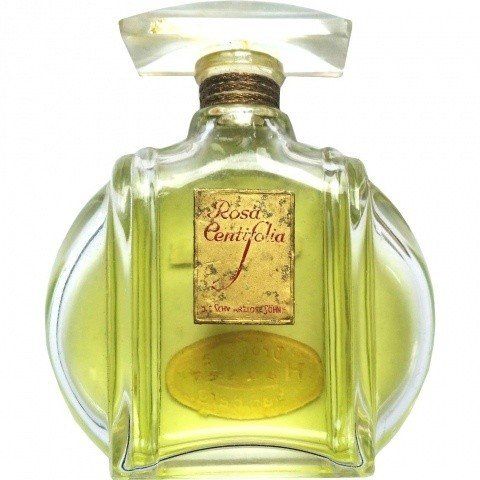
Their continuing renown for combining heritage quality with contemporary tastes meant that by 1902, with Ernst Köthner, grandson of Joachim Friedrich Schwarzlose, now sole owner; the company had begun expanding further in foreign markets worldwide – Spain, Asia and Australia just some of the locations their products are sought-after. Continuing their innovative ways, around the turn of the century, they launched their first perfume vending machine to the English-speaking world, with the automat promising ‘to dispense ‘Perfume Soap-Powder’ in the four different fragrances: ‘Eau De Cologne’, ‘Rosa Centifolia’, ‘Lilaflor’, and ‘Melati Radja’ onto a handkerchief held in front of it.’

The crippling inflation of the early 1930’s saw many established houses go under, but luckily J.F. Schwarzlose survived – testament to their wise business-handling and fine perfumery skills. In fact, they’re able to move into a modernised store located on Leipziger Straße 113 in the September 1930. They continued to thrive for well over another decade, but another war was looming, and their fragrant fate was not so kind, this time…


In 1944 the J.F. Schwarzlose factory and shops were bombed and totally destroyed. That might have been the end of the tale – another proud perfume house lost to history – were it not for the resilience of one Anni Köthner, who restarted the business, first in Hamburg, then moving back to its true home city, Berlin. But the shadow of the Berlin wall now loomed, in 1961 splitting locations of the company East and West Germany, impacting on the business, which ceased trading once again in 1976.


But what a phoenix this fragrance house is – because the story isn’t finished. In 2012, packaging designer Lutz Herrmann and communication expert Tamas Tagscherer revived it under the name J.F. Schwarzlose Berlin – enlisting brilliant perfumer Véronique Nyberg as the ‘nose’.

Today, this new guard remains ‘in close contact with the last heir to Schwarzlose, Jutta Jank-Trabant, who is delighted to find the brand on display again… and is always a welcome guest in the new office of J.F. Schwarzlose Berlin. And how utterly joyous this important perfumery was saved once again! Now thriving afresh, the modern-day fragrances of J.F. Schwarzlose harness the grandeur of their heritage, and all they learned through history, but still stay true to leading the fashions rather than merely following them.

We think this heritage name deserves to be celebrated the world over – a house that’s so proudly continued and re-invigorated their fragrant catalogue with the most modern innovations. So now, we urge you to continue the Schwarzlose Berlin story by trying their wonderful scents for yourself…

By Suzy Nightingale


Penhaligon’s fascinating fragrant history

Penhaligon’s are one of the most famous fragrance houses in the world, a proudly British brand with the most fascinating fragrant history…

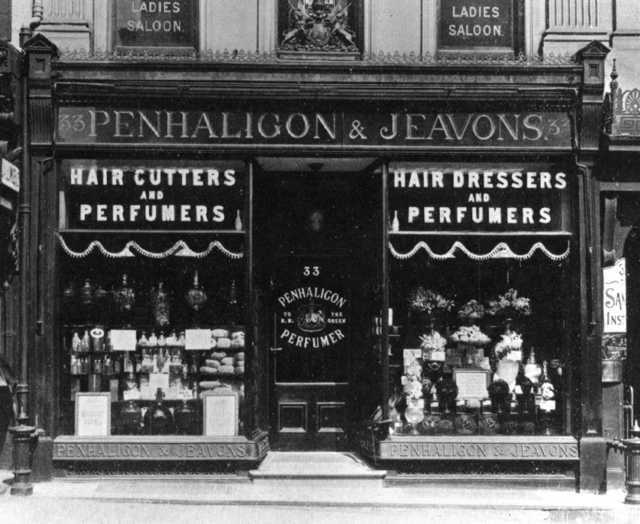
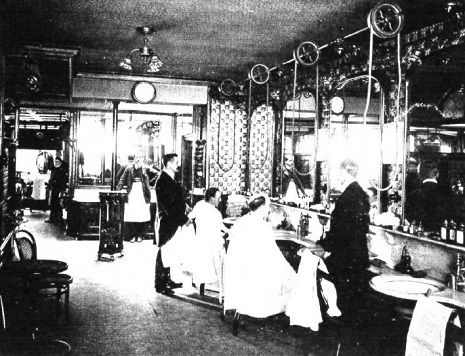
Hot towels and steamily scented delights were the order of the day for customers flocking to the famous Piccadilly Turkish Baths on Jermyn Street and it was here that William Penhaligon started working as a hairdresser in the 1860s. Originally from Penzance, Cornwall, his shrewd eye for business led to him opening a rival salon just down the street a few years later. There, Penhaligon began creating his very own fragrances, lotions and potions for a most discerning clientele to enjoy.

1891 saw what was then ‘Penhaligon’s & Jeavons’ move to the even more prestigious premises of 33 St James Street and 66 Jermyn Street, with the two stores linked together at the rear. They announced to the press that not only were they the sole suppliers for the original Penhaligon’s ‘hit’ fragrance of Hammam Bouquet, but that both shops boasted a new- fangled invention of… electric lighting – still a novelty at this point in retail!

Clearly a whizz with the scissors and the scents, Penhaligon was appointed Royal Barber and Perfumer to the Royal Court during Queen Victoria’s reign and by 1903 his business was granted its first Royal Warrant from Queen Alexandra. Nearly a century and a half later, Penhaligon’s has added Royal Warrants from The Prince of Wales (granted in 1988) and the Duke of Edinburgh (granted in 1956) to their regal roll call.

140+ years old they may be, but that doesn’t mean the techniques they use are stuck in a time-warp. Penhaligon’s consistently make the most of the newest fragrance technology – from CO2 extraction to Nature Print Technology and beyond – promising that ‘each bottle contains a blend of the very old and very new.’ Those distinctive bottles tap into their history, too; clear glass and brightly coloured bow-ties adorning the stoppers are a direct echo of William’s original design.

Still made and produced in England, many of the original fragrances can still be found in the current collection, including Hamman Bouquet. Lately, however, Penhaligon’s have collaborated with some of the greats noses of modern times – including Bertrand Duchaufour, Olivia Giacobetti, Olivier Cresp and Alberto Morrillas.

Lately, a whole ‘family’ has been added to their already impressive stable of fragrances, the Penhaligon’s Portraits. Displaying more than a dash of exquisite eccentricity, we’re invited to get to know the characters, like The Ruthless Countess Dorothea, who is ‘A most ferocious matriarch, known for her sharp mind, even sharper wit and a secret fondness for the company of young men and scones.’ While described in mischievously historical tones, it’s a tingling, ginger-infused shot of oppulence on a cosy, slightly boozy base. And all the Portraits fragrances have their fingers on the button of contemporary fashions – much like the house of Penhaligon’s itself.

Penhaligon’s is a treasure trove of scents to discover – rich in both heritage and modern mischieviousness – and how many perfumeries still standing (and thriving) since the 1800’s can you think of? We love the way each boutique has its own distinct personality, too, with lavishly appointed interiors uniquely themed to suit each location.

Have you been to visit the newly re-vamped Penhaligon’s Wellington Street store in Covent Garden? We rather swooned over the decor (while sniffing out all the latest scents). Whichever boutique you visit, we’re sure you’ll love getting to know the entire ‘family’ of fragrances…

By Suzy Nightingale

Meet the Jo Malone London Gent – John Boyega

Following in the footsteps of the ‘Jo Malone London Girls’ –  Poppy Delevingne and Karen Elson – get ready to greet the new fragrant face and ‘Jo Malone London Gent‘: London born movie star, John Boyega.

Jean-Guillaume Trottier, Global President of Jo Malone London, explained they chose Boyega because, as a ‘…born and bred Londoner, John is intelligent, inclusive and witty. He shares our core values of generosity and creativity and is unafraid to speak his mind. His vivacity and whole-heartedness make him a wonderful fit with Jo Malone London and I am delighted to welcome him to the family.’

The boy from Peckham’s done well, that’s for sure: from recieving BAFTA’s 2016 Rising Star Award and the Chopard Trophy at Cannes, Boyega captured worldwide attention for his starring role as Finn, forst in Star Wars: Episode VII – The Force Awakens (which happens to be the highest-grossing US film of all time), and again in Star Wars: Episode VIII – The Last Jedi (the highest grossing film, worldwide, of all time).
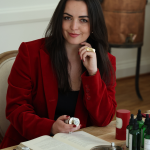
But it’s not just the big-hitters he’s known for, as Boyega has also graced indie smashhits such as Detroit and Attack the Block, now bringing his vibrancy, vigour and versatillity to the proudly homegrown brand, and along with redefining what it means to be a contempirary gent right now, Jo Malone London say he ‘mirrors our scents which always accentuate the surprising and the bold. Whilst known for being a huge presence and personality, Boyega himself values understatement and originality in scent.’

And we’re sure you’re going to want to know this gent better, so are delighted to share with you a Q&A, below, as well as a sneak peek at his first film for Jo Malone London…

What made you join the Jo Malone London Family?

John Boyega: ‘I love the creativity and storytelling element of Jo Malone London. It’s something I resonate with, it’s how I work best: with discussion, collaboration and down to earth honesty. Jo Malone London always delivers unexpected and unique ingredient choices and scents. It’s refined, but it’s surprising too. My life is the same, a subtle contradiction: my job, my profession, and then I still come home to this town, I still go to the supermarket late at night in my pyjamas. In some ways, everything’s changed, but then again nothing has.’

What is your relationship to scent?

‘Scent is part of my everyday style. My personal style is quite casual but I like to mix it up with interesting fits with Japanese influenced jackets, fitted trousers and chains. I like that I can change up my scent to suit my style. I’m guilty, I like to layer my fragrance. You can make some really interesting smells. If my life was a bottle of cologne it would be called: Conflicts and Success. A new Boyega line.’

What is your first memory of scent?

‘My first job was before school, I would deliver post, milk and sweets. And then I used to sell a bit at school. Sell a little bit of candies, Rockies, Haribo’s. So, my childhood smells like those old school sweets, those drumsticks, gobstoppers, spicy soup.’

What Jo Malone London products would you recommend?

‘Bronze Wood & Leather Cologne Intense is a solid favourite. It’s a really good scent. I like to wear it on a day-to-day basis. It doesn’t attract too much attention, but at the same time it gets people looking and smelling.
I also like a bit of oud; oud is a lovely smell.’

What do you look for in a script?

‘I look for a number of things in a script. But for me, the main thing is the character arc. I don’t want my character to begin and end the movie the same. I want a change, something different. Something that happens with the character, that means you have to go on an interesting journey with him.’

What’s your favourite part of being on set?

‘My favourite part about being on set is collaborating with the people. I’ve always watched films and never had clarity in my younger days on how the magic starts and is created. So, to be a part of that and witness it is the biggest rush.’

What is something you didn’t expect about being famous?

‘One thing I didn’t expect about being famous is the fact that some things don’t change. Sometimes you have to wait in the queue like everyone else and that’s fine. I mean, I guess I got told so many things about being famous I thought that everything was going to change for me. But I still go shopping late at night in my PJ’s. Nothing’s really changed.’

What wouldn’t you go a day without?

‘I won’t go a day without wearing a comfortable pair of socks. It doesn’t matter if they’re different socks because sometimes in the wash, things get confusing. But as long as they’re both comfortable. I’m cool. I also wear scent every day.’

What do you miss most about England when you’re not here?

‘Sometimes I miss the weather, because I want to put on a jacket. And not always be surrounded by blue skies and sun. I miss the moody faces, I can’t lie, there’s something about the reality and honesty that I like. I just miss London, I miss home.’

What’s the first thing you do when you get back to London?

‘The first thing I do is take a drive. I go back around South London, then drive around Crystal Palace, all the way around Dulwich, go down to Brixton. Just go for a drive, get the feel of the city, see what’s going on. Put the radio on. I just catch a vibe.’

So now, settle down, and get ready to see the Jo Malone Gent in action! (If you happen to have a bottle of Bronze Wood & Leather Cologne Intense nearby, you could always spray that all over for some multi-sensory cinema action, as now at least we know his current favourite fragrance…)

So for his latest – scented – starring role, expect to see Boyega further ‘navigate new territory, celebrating Britishness, storytelling and fragrance as he takes on a new kind of spotlight as the first Jo Malone London Gent.’