Fragrances today are mostly a fusion of ingredients taken from nature – or inspired by nature – together with the synthetics (man-made ingredients) that are used to make them last longer, ‘carry further’, or stay ‘true’, when worn on the skin.
Here, you can read about literally hundreds of the different perfume elements in use today. If you know which ingredient you want to read about, you can either input the name into our ‘search’ box (top right). Or click on a letter of the alphabet below – and it’ll take you to a collage of all the ingredients that start with that letter. Alternatively, let your eye travel over the scrolling, rolling collage below – and click on whatever takes your fancy: a visual ‘lucky dip’…
Oak
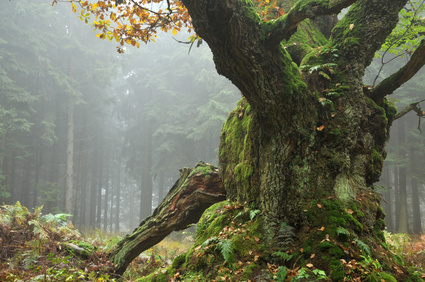
As you might imagine, a perfume ingredient extracted from one of our sturdiest trees adds a bit of ‘heft’ to a scented creation: dry, woody, grounding. But there’s also a teeny touch of vanilla to oak (synthetic vanillin, used in many baked goods and confectionery, is derived from wood shavings!), to lighten the woodiness. Interestingly, the Thierry Mugler brand now says it’s ‘ageing’ its fragrances in wood casks – an echo of the wine and spirits world…
Smell oak in:
Penhaligon’s Quercus

Oakmoss
Oakmoss is among perfumers’ most beloved ingredients: an essential element of fragrances within the chypre family (which you can read more about here), in partnership with bergamot: it ‘anchors’ volatile notes. Its more romantic French name is ‘mousse de chêne, but this tight-curled plant – botanical name Evernia prunastri - is actually a lichen which grows on oaks throughout Europe and North Africa, only flourishing in unpolluted air. It can range in colour from light green to black depending on whether it’s dry or damp - and it smells a lot more beautiful than it looks.
Oakmoss smells earthy, and woody, sensual with hints of musk and amber and is really not like anything else in the perfumer’s ‘palette’ because it also works fantastically as a ‘fixative’ to give scent a longer life on the skin. As you might suspect, there’s a touch of damp forest floor to this material, too.
The use of oakmoss in perfumery goes back a long, long way. Coty’s Chypre perfume, in 1917, popularised this type of fragrance – but in fact, chypre scents, inspired by the island of Cyprus, had been beguiling people for centuries. For hundreds of years, from Roman times (that’s as far back as we know about) this style of perfume blended styrax, calamus and labdanum; in the Middle Ages, oak moss began to be added, to create ‘pastilles’ for burning.
But there’s one snag with this exquisite material: it’s been ‘blacklisted’ by the International Fragrance Association (IFRA) as a potential irritant, its use restricted by European regulation to 0.1% in perfume compositions that are applied to the skin – a restriction which has sent ‘noses’ into tailspins in labs across the world, as they were forced to remove or reduce this lynchpin ingredient in their often very famous formulations. Some ‘noses’ played around with ingredients like patchouli, or synthetic ‘imitations’ of oakmoss to try to achieve some of the same effects as this wonder of the natural scent world, but there’s no question that some favourite fragrances started not to smell like themselves.
Now, though, there’s a way through – which is glorious news for chypre-lovers everywhere. Through a process of ‘fractionation’ – separating the different elements of an individual ingredient, and removing the potential sensitiser – it’s possible to get an ingredient that’s much closer to the oakmoss we know and loved.
However, as Guerlain’s in-house perfumer Thierry Wasser explained to us, whenever something is removed from an ingredient through fractionation, ‘it leaves a hole’. Thierry’s stroke of genius was to plug the gap with a touch of celery seed, instead. Hey, presto: Mitsouko – probably the most famous chypre in the world still available today – is restored to its former glory. (And we just love the way that perfumers rise to challenges like this…)
PS Oakmoss has a near-relation, known as ‘tree moss’ - Evernia Furfuracea - which grows on pine trees, has a turpentine-y scent before it’s blended, and is also very highly-prized among perfumers.)
Smell oakmoss in:
Guerlain Mitsouko
Olive
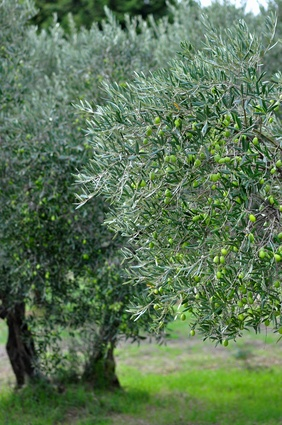
We’re used to slooshing this onto our salads or into our frying pans – but spritzing it onto our pulse-points? Well, yes: the fragrant use of olive goes back millennia: the early Arab perfume-makers used it as a base in many of their scented creations, and the Egyptians used it to steep jasmine blossoms, to produce a fragrant oil. Olive has had many other therapeutic benefits: as an aphrodisiac, in healing balms and creams, as sedatives and tonics. (And we’ve noticed that lately it’s having a moment in the sun in the form of olive leaf tea, packed with health-giving antioxidants.) Symbolically, olive leaves represent abundance (as well as glory) – and that’s certainly true of this Mediterranean tree, which is quite a multi-tasker in perfume-terms. The leaves, bark, fruits and flowers all offer different nuances: earthy, peppery, fruity, buttery or subtly herbal.
Smell olive in:
4160 Tuesdays The Gin Garden
Opium
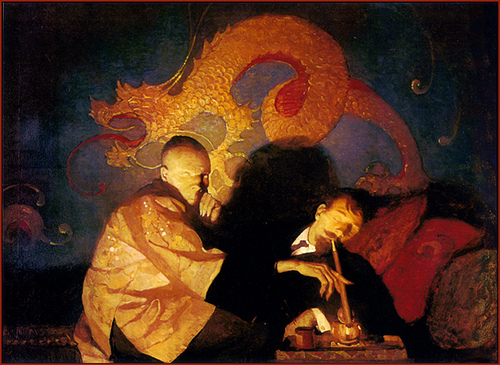
Naughty, naughty, naughty. When you see opium listed as a fragrance note, it implies something mischievous and mysterious about the perfume itself. Since ancient times, the opium poppy has been regarded as a symbol of nocturnal decadence, intrigue – but also, with healing powers. It’s been used in ritual at least since the Stone Age (stoned age?), and Egyptian, Roman, Persian, Chinese, Greek and Arab empires have also used it made ceremonial, medicinal and culinary use of opium poppies. It only began to get a bad name during the 16th and 17th Century, with poets and authors among those who fell for opium’s narcotic charms. Not surprisingly, in perfumery it’s use to ‘hypnotic’ effect: a powdery, floral note that works beautifully in Ambrée compositions.
Smell opium in:

Opoponax
A wonderful name for a glorious gum resin ingredient that’s smokey and soft, luminous and sensual all at once. (Some people think it smells like crushed ivy leaves. Others are reminded of angelica, frankincense and celery, while we love this quote from the blogger Boisdejasmin, when she dipped her testing strip into some opoponax: ‘The wave of warm, sweet scent washed over me: it smelled of aged whiskey, mahogany shavings and bitter caramel, but it was also velvety and powdery.’ The resin is extracted from the bark of the Commiphora eyrthraea tree (mostly from Somalia), and is also known as ‘sweet myrrh’. (It’s sometimes spelled opopanax, too, with an ‘a’.)
Opoponax catches alight easily, which explains why it’s been used for incense for centuries: King Solomon apparently regarded opopanax as ‘the noblest of incense gums’. In perfumery, it lends itself most beautifully to Ambrées, working its exotic magic in many much-loved scents.
Here's what perfumer Sarah McCartney has to say about this ingredient: 'I bought opoponax at first just for the name. It’s my new favourite word. I had to see what it was like, then I fell totally in love with it. No one outside perfumery knows what it smells like by itself because to blends to beautifully with other materials. I described it recently as having the consistency of molasses, but they’d never heard of molasses either so let’s say it’s like incense treacle. These resinous materials like myrrh, the Peru and tolu balsams, benzoin, labdanum and opoponax have been around for thousands of years, helping perfumes to stick around for longer, blending with flowers, citrus fruit and herbs. They give perfumes a gentle, deep dark, sensuality. When I take the lid off and sniff, I can’t help letting out a long appreciative mmmmmmmmm.'
Smell opoponax in:

Orange
Where would perfumery be, without orange...? The blossom of the bitter orange tree (a.k.a. neroli, when it’s extracted in a particular way) is one of the most precious scent ingredients of all. Bigarade, from the fruit of that tree, is another key ingredient in colognes, while its leaves give us petitgrain, another popular element in citrussy scents. And then there’s orange itself (sometimes referred to as sweet orange, to distinguish it from the bitter, ‘marmalade’ variety.)
Everyone knows what an orange smells like, of course: that burst of zest as you dig your fingers into the waxy skin to break into this juiciest of fruits. That ‘whoosh’ of uplifting zestiness is precisely why perfumers love to use it: as a sweet, refreshing, sadly fleeting top note, very often in colognes but also in Ambrée and fruity-floral scents. Sweet orange oil itself is harvested by cold-pressing the fresh of this fruit – which turns out to be a hybrid between the mandarin and the pomelo, which only came into existence in Europe and China in the 11th Century. The key aroma compound in sweet orange oil, meanwhile, is something called d-limonene – and it’s also a sensitiser for some people, meaning it has to be listed (albeit in the teensiest writing) on labels.
Smell orange in:
Diptyque Eau de Tarocco

Orange blossom
Orange blossom and neroli are a bit confusing, as ingredients. They’re both from the small white flowers that blossom on the bitter orange tree (Citrus aurantia) - which is much more fragrant than the orange tree which produces the fruit for eating.
Orange blossom is extracted from the flower through the use of solvents. Neroli (which you can read about under ‘N’) is steam-distilled. They’re subtly different, in the hands of perfumers. Orange blossom absolute is richer, sweeter, headier – there are hints of that other white flower, jasmine, about it (and if you look at its chemical make-up, there are similar aroma compounds in both).
Orange blossom can be used almost symbolically in fragrance, as well as for its bewitching scent: over time, it’s come to represent purity, moral virtue and innocence, but fruitfulness and fertility, too. As a flower, orange blossom has long played a role in weddings: maidens have carried it in bouquets and woven it into bridal headdresses since the time of the Crusaders, when trees were brought from the East to Europe, and began to flourish here.
What better ingredient for fragrances suitable for brides, then...? But in fact, orange blossom’s versatility lends itself to all kinds of fragrances – so it’s very widely used, acting too as a natural ‘fixative’ to prolong the life of will-o’-the-wisp ingredients. You can enjoy it in colognes, ambrées chypres, as well as petal-perfect florals.
Smell orange blossom in:
Francis Kurkdjian APOM Pour Femme
L’Artisan Parfumeur Seville a l’Aube
Penhaligon’s Orange Blossom
SokiLondon Cleopatra
Orchid
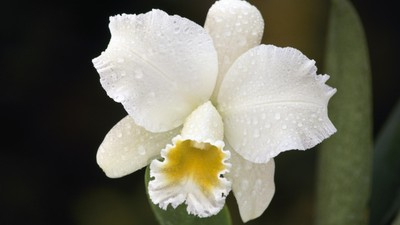
Do orchids smell? Not the ones we now buy in supermarkets, which have become such a popular design statement. But yes, in the wild, some do: the Cattleya orchid, in particular – though even that varies, from heady and vanilla-y to light and clean. (Other orchids - obviously not used in perfumery - can stink of rotten meat, or faeces. The smell is to attract the type of insect that pollinates the plant: some clearly get off on pretty smells, others on stinkers.)
There are thought to be over 20,000 different orchids altogether. The name (who knew?) comes from the Greek ‘órkhis’, literally meaning "testicle", thanks to the shape of the root.
Not terribly romantic, but we do like the Greek myth behind the naming of the plant. So the legend goes, Orchis – son of a satyr and a nymph (quite a combo) stumbled upon a festival of Dionysus (a.k.a. Bacchus), in a forest. As tended to happen at ‘bacchanales’, he imbibed too much, and became somewhat over-amorous towards a priestess. The Bacchanalians tore him apart. His father prayed for Orchis to be restored, but instead the gods transformed him into the flower we know today as the orchid.
In reality, when you smell ‘orchid’ as a fragrance note, today it’s more likely to be synthetic. Nice myth, though.
Smell orchid in:
Dior J’Adore
Jean-Paul Gaultier Classique
Viktor & Rolf Flowerbomb

Orris root
A hugely precious ingredient, this – with a heart-stopping price-tag. That’s because the orris – from the rhizomes, or ‘bulbs’ of the iris plant – are odourless when harvested, and take three or four years to mature. (They’re left in a cool, dry place, and need protection against fungus and insect attack which would destroy the producer’s valuable harvest.)
Iris, or orris, has lent its sweetness to perfumery for centuries – as far back as Ancient Rome and Greece, or perhaps even beyond. Back then, it was made into hair and face powders, placed into pomanders, and was the basis for delicious perfumed sachets for wearing on the body. (An idea we’d rather like to see revived...) Iris has long been a symbol of majesty and power, too.
The most sought-after type of orris come from the Iris pallida variety, which flourishes in the warmth of the Mediterranean. Florentine iris ticks perfumers’ boxes, too. After those rhizomes have aged, they’re powdered – and then steam-distilled, producing orris oil, which solidifies into something known as ‘orris butter’ (or ‘orris concrete’), because of its oily, yellow texture and appearance.
It's been highly fashionable in fragrances for the past few years: sweet, soft, powdery, suede-like – rather like violets, which we tend to be more familiar with as a scent. Actually, iris runs the spectrum from sweet to earthy: it also works brilliantly to ‘fix’ other ingredients, giving a more lasting quality to florals and base notes. Often, only the lightest touch of orris is needed in fragrances – but ‘noses’ wouldn’t be without it, for the world.
Smell orris root in:
Acqua di Parma Iris Nobile
Chanel Les Exclusifs 28 La Paula
Frederic Malle Iris Poudre
Guerlain Après l’Ondée
Guerlain Samsara
Jovoy Paris Poudre
Prada Infusion d’Iris
Yves Saint Laurent Paris

Osmanthus
You may well have smelled osmanthus in a fragrance without realising: this creamy white blossom gives a surprisingly mouthwatering, succulent, hints-of-peach-and-plum-and-apricot nuance to perfumes. Fresh – but sophisticated, too. Succulent – but somehow creamy and milky. You may also get hints of violet. And what is it...? A Far Eastern flower, a member of the lilac and olive family: known as Kwei Hwa or Mo Hsi, it’s been used there to fragrance tea and other drinks, as well as jam. But in the perfumer’s repertoire, it’s a pricy ($4,000+ a kilo), refined ingredient worth its weight in gold – sometimes blended with synthetics that bring out its peachiness, however. Osmanthus also works beautifully in leathery, suede-like scents, as well as florals.
Smell osmanthus in:
Givenchy L’Interdit
Michael Kors Michael Kors
SokiLondon Artemis

Oudh
Oudh (sometimes spelled 'oud') has become a phenomenally popular ingredient, but still divides opinion. It’s one of those ‘Marmite’ perfumery ingredients, which people either swoon over or clutch their pearls and scream while avoiding at all costs.
A key ingredient in old and new Arabic perfumery, renowned as an element within high-quality incense in Arabic, Japanese and Indian cultures, oudh has now definitively crossed over to the west. It’s rare, and seriously expensive, and even endangered: as it’s become more popular, high-quality oudh is becoming hard to source.
That’s because it takes almost forever to produce oudh, which is actually the resinous heart-wood from fast-growing evergreen trees – usually the Aquilaria tree. The agarwood is a result of a reaction to a fungal attack, which turns this usually pale and light wood into a dark, resinous wood with a distinct fragrance – a process that takes hundreds of years. From that ‘rotten’ wood, an oil is made – and then blended into perfume. The aroma of ‘natural’ oud is distinctively irresistible and attractive with bitter sweet and woody nuances: seriously earthy (and in small quantities, seriously sexy).
Collection of oudh from natural forests is now illegal under CITES (the Convention on International Trade in Endanged Species of Wild Fauna and Flora), but some is now beginning to be plantation grown in Vietnam.
As an alternative, perfumers have turned to synthetic oud, although trained noses will tell you that it smells plainer, woody and leathery – but without the warm, balsamic qualities. There truly is an oudh for all tastes, now!
Smell oudh in:
Cartier Les Heures Voyageuses Oud & Menthe
Floris Honey Oud
Maison Francis Kurkdjian Oud Satin Mood
Molton Brown Mesmerising Oudh Accord & Gold
Penhaligon’s Halfeti
Strangelove deadofnight
THOO (The House of Oud) Wonderly